(
Nov 24, 2025
)
Beyond People, Planet, Profit: How the Language of Efficiency Holds Sustainability Back
The Triple Bottom line helped wrestle sustainability away from finger-wagging morality, but that still doesn't mean we're buying it.
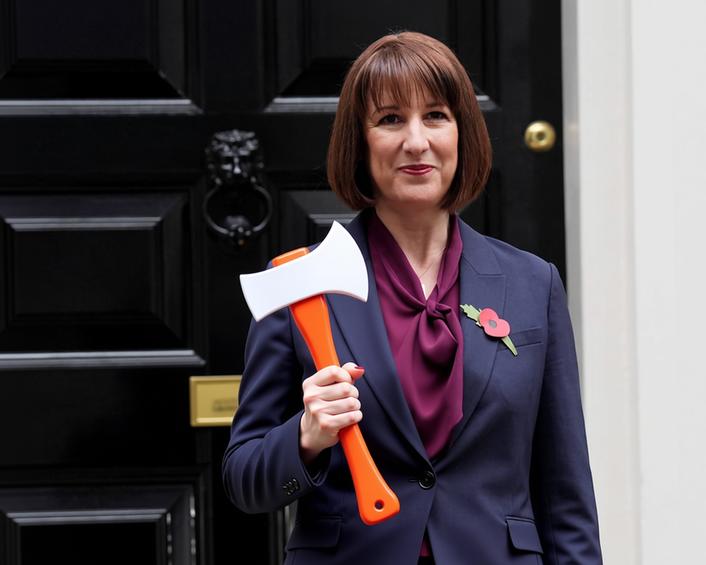
With the UK government set to announce its 2025 budget, the headlines are bracingly familiar: spending cuts, inflation pressures, and squeezed public services. Across the world, businesses and governments alike are tightening belts, from rising energy costs to mounting interest rates.
For sustainability, climate, nature, and circular economy communicators, frameworks like the Triple Bottom Line (TBL) can feel like a lifebuoy in these choppy financial waters. People. Planet. Profit. A tidy business case for “doing the right thing.”
But here’s the catch: in a year defined by economic pressure, uncertainty, and heightened climate urgency, the language of efficiency and metrics may actually be holding us back. Relying solely on checklists and rational trade-offs risks missing the deeper levers that drive behaviour change: culture, identity, aspiration, and imagination.
The Triple Bottom Line Was Never Just a Scorecard
Over 30 years ago, John Elkington introduced TBL to challenge conventional capitalism — not as a spreadsheet, not as a PR tool, but as a blueprint for systemic change:
Breakthrough innovation
Disruption of unsustainable industries
Asymmetric growth that scales next-generation solutions
Yet the framework was quickly diluted. As Elkington later reflected:
“Many early adopters understood the concept as a balancing act, adopting a trade-off mentality.”
By 2019, he formally called for a rethink, warning that TBL had been co-opted into an accounting framework at the expense of its deeper ambition.
Why Efficiency Narratives Fall Short
TBL has often been reduced to checkboxes in sustainability communications:
Good for people? ✔
Good for the planet? ✔
Good for profit? ✔
But the major lifestyle and organisational choices we need people to make — what to eat, how to travel, where to live, who to work for — rarely pivot on rational metrics alone. These decisions are shaped by identity, aspirations, social norms, and culture.
A Lesson from History: Horses vs Cars
A century ago, horses were central to human life — symbols of loyalty, status, and hard work. Then the automobile arrived: noisy, expensive, unreliable. Yet it replaced horses within decades.
Why? Not because cars were more “efficient.” They captured imagination, offered freedom, independence, and the promise of a new life. People didn’t want a better horse; they wanted a future aligned with their aspirations.
The lesson for sustainability communicators is clear: metrics alone don’t drive behaviour change. Culture, imagination, and identity do.
Connecting Climate Action to Values and Identity
Economic pressures often push communicators toward business cases and efficiency metrics. That’s logical, but insufficient. Change sticks when it connects to:
Identity and social belonging
Aspirations and pride
Cultural norms and community values
It's a way of thinking we explored in more depth for Pop Culture: Bursting the Climate Communications Bubble, which I authored for New Zero World along with the incredible Dr Marcus Collins - former chief strategy officer at Wieden and Kennedy.
A New Approach for Communicators
The shift from horses to cars was a cultural revolution, not a technological upgrade. The same principle applies to climate action: we need narratives that spark imagination, align with values, and make sustainable choices desirable.
For sustainability professionals, the takeaway is simple: don’t just make the business case. Craft the cultural case. Connect climate action to the lives people want to live — and the behaviours will follow.
Further reading
More News
Explore insights, tips, and trends to elevate your sustainability, circularity and climate communications.

(
Nov 24, 2025
)
Beyond People, Planet, Profit: How the Language of Efficiency Holds Sustainability Back
The Triple Bottom line helped wrestle sustainability away from finger-wagging morality, but that still doesn't mean we're buying it.
With the UK government set to announce its 2025 budget, the headlines are bracingly familiar: spending cuts, inflation pressures, and squeezed public services. Across the world, businesses and governments alike are tightening belts, from rising energy costs to mounting interest rates.
For sustainability, climate, nature, and circular economy communicators, frameworks like the Triple Bottom Line (TBL) can feel like a lifebuoy in these choppy financial waters. People. Planet. Profit. A tidy business case for “doing the right thing.”
But here’s the catch: in a year defined by economic pressure, uncertainty, and heightened climate urgency, the language of efficiency and metrics may actually be holding us back. Relying solely on checklists and rational trade-offs risks missing the deeper levers that drive behaviour change: culture, identity, aspiration, and imagination.
The Triple Bottom Line Was Never Just a Scorecard
Over 30 years ago, John Elkington introduced TBL to challenge conventional capitalism — not as a spreadsheet, not as a PR tool, but as a blueprint for systemic change:
Breakthrough innovation
Disruption of unsustainable industries
Asymmetric growth that scales next-generation solutions
Yet the framework was quickly diluted. As Elkington later reflected:
“Many early adopters understood the concept as a balancing act, adopting a trade-off mentality.”
By 2019, he formally called for a rethink, warning that TBL had been co-opted into an accounting framework at the expense of its deeper ambition.
Why Efficiency Narratives Fall Short
TBL has often been reduced to checkboxes in sustainability communications:
Good for people? ✔
Good for the planet? ✔
Good for profit? ✔
But the major lifestyle and organisational choices we need people to make — what to eat, how to travel, where to live, who to work for — rarely pivot on rational metrics alone. These decisions are shaped by identity, aspirations, social norms, and culture.
A Lesson from History: Horses vs Cars
A century ago, horses were central to human life — symbols of loyalty, status, and hard work. Then the automobile arrived: noisy, expensive, unreliable. Yet it replaced horses within decades.
Why? Not because cars were more “efficient.” They captured imagination, offered freedom, independence, and the promise of a new life. People didn’t want a better horse; they wanted a future aligned with their aspirations.
The lesson for sustainability communicators is clear: metrics alone don’t drive behaviour change. Culture, imagination, and identity do.
Connecting Climate Action to Values and Identity
Economic pressures often push communicators toward business cases and efficiency metrics. That’s logical, but insufficient. Change sticks when it connects to:
Identity and social belonging
Aspirations and pride
Cultural norms and community values
It's a way of thinking we explored in more depth for Pop Culture: Bursting the Climate Communications Bubble, which I authored for New Zero World along with the incredible Dr Marcus Collins - former chief strategy officer at Wieden and Kennedy.
A New Approach for Communicators
The shift from horses to cars was a cultural revolution, not a technological upgrade. The same principle applies to climate action: we need narratives that spark imagination, align with values, and make sustainable choices desirable.
For sustainability professionals, the takeaway is simple: don’t just make the business case. Craft the cultural case. Connect climate action to the lives people want to live — and the behaviours will follow.
Further reading
More News
Explore insights, tips, and trends to elevate your sustainability, circularity and climate communications.
(
Nov 24, 2025
)
Beyond People, Planet, Profit: How the Language of Efficiency Holds Sustainability Back
The Triple Bottom line helped wrestle sustainability away from finger-wagging morality, but that still doesn't mean we're buying it.
With the UK government set to announce its 2025 budget, the headlines are bracingly familiar: spending cuts, inflation pressures, and squeezed public services. Across the world, businesses and governments alike are tightening belts, from rising energy costs to mounting interest rates.
For sustainability, climate, nature, and circular economy communicators, frameworks like the Triple Bottom Line (TBL) can feel like a lifebuoy in these choppy financial waters. People. Planet. Profit. A tidy business case for “doing the right thing.”
But here’s the catch: in a year defined by economic pressure, uncertainty, and heightened climate urgency, the language of efficiency and metrics may actually be holding us back. Relying solely on checklists and rational trade-offs risks missing the deeper levers that drive behaviour change: culture, identity, aspiration, and imagination.
The Triple Bottom Line Was Never Just a Scorecard
Over 30 years ago, John Elkington introduced TBL to challenge conventional capitalism — not as a spreadsheet, not as a PR tool, but as a blueprint for systemic change:
Breakthrough innovation
Disruption of unsustainable industries
Asymmetric growth that scales next-generation solutions
Yet the framework was quickly diluted. As Elkington later reflected:
“Many early adopters understood the concept as a balancing act, adopting a trade-off mentality.”
By 2019, he formally called for a rethink, warning that TBL had been co-opted into an accounting framework at the expense of its deeper ambition.
Why Efficiency Narratives Fall Short
TBL has often been reduced to checkboxes in sustainability communications:
Good for people? ✔
Good for the planet? ✔
Good for profit? ✔
But the major lifestyle and organisational choices we need people to make — what to eat, how to travel, where to live, who to work for — rarely pivot on rational metrics alone. These decisions are shaped by identity, aspirations, social norms, and culture.
A Lesson from History: Horses vs Cars
A century ago, horses were central to human life — symbols of loyalty, status, and hard work. Then the automobile arrived: noisy, expensive, unreliable. Yet it replaced horses within decades.
Why? Not because cars were more “efficient.” They captured imagination, offered freedom, independence, and the promise of a new life. People didn’t want a better horse; they wanted a future aligned with their aspirations.
The lesson for sustainability communicators is clear: metrics alone don’t drive behaviour change. Culture, imagination, and identity do.
Connecting Climate Action to Values and Identity
Economic pressures often push communicators toward business cases and efficiency metrics. That’s logical, but insufficient. Change sticks when it connects to:
Identity and social belonging
Aspirations and pride
Cultural norms and community values
It's a way of thinking we explored in more depth for Pop Culture: Bursting the Climate Communications Bubble, which I authored for New Zero World along with the incredible Dr Marcus Collins - former chief strategy officer at Wieden and Kennedy.
A New Approach for Communicators
The shift from horses to cars was a cultural revolution, not a technological upgrade. The same principle applies to climate action: we need narratives that spark imagination, align with values, and make sustainable choices desirable.
For sustainability professionals, the takeaway is simple: don’t just make the business case. Craft the cultural case. Connect climate action to the lives people want to live — and the behaviours will follow.
Further reading
More News
Explore insights, tips, and trends to elevate your sustainability, circularity and climate communications.