
(
Nov 14, 2025
)
Creative Integrity: How to measure creative climate impact
We've always known creativity has a cost when it comes to the climate - but we have not always known how to measure it. That's changing - and fast. Here's what you need to know about Serviced Emissions and what it means for your brand or agency.
For years, sustainability and communications professionals have understood a simple truth: creativity has a climate impact. What we haven’t had is a shared way to measure that impact—making it hard for responsible agencies to prove their value, and far too easy for others to look the other way while enabling high-emitting industries.
That is now changing. Thanks to the work of folks like Purpose Disruptors, Clean Creatives, ACT Climate Labs and Creatives for Climate and the new Serviced Emissions framework developed by industry experts and UNFCCC, the creative sector finally has language, tools, and methodologies to quantify its true influence.
This shift marks a turning point for agencies, brands, and anyone working at the intersection of sustainability and communications.
Why creative influence matters
Creative professionals don’t just “make campaigns”. We make culture—and culture shapes demand.
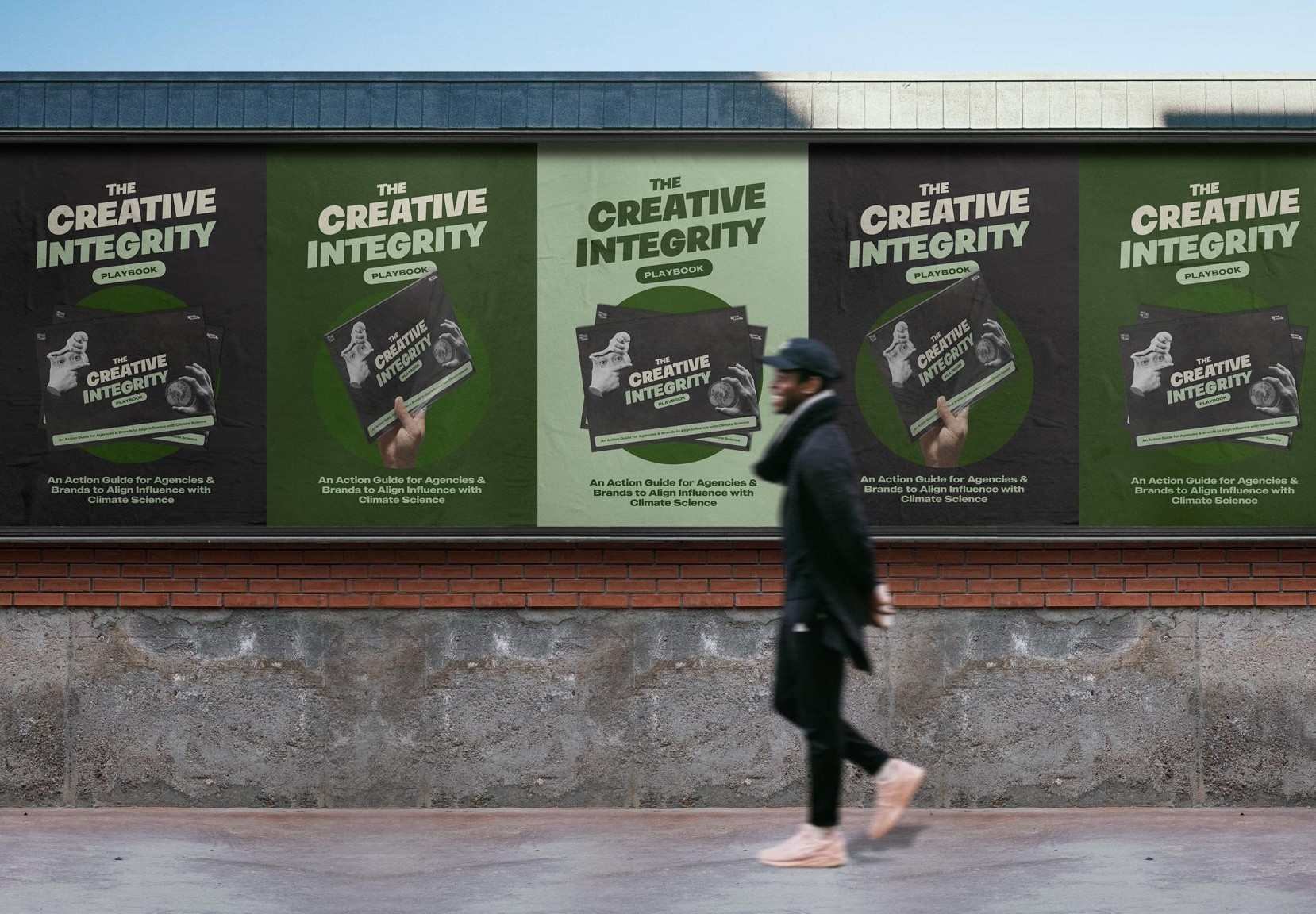
The Creatives for Climate Creative Integrity Playbook , which I helped to co-author with Lucy Von Sturmer and Ece Esijoy highlights a core reality: the climate impact of a creative agency is not primarily in its office emissions (the lightbulbs, reusable cups, and bike to work schemes). It lies in the downstream impact of the work itself—the narratives we advance, the behaviour we encourage, the demand we drive.
This is what the UN High-Level Champions and University of Oxford formally defined as serviced emissions in the Serviced Emissions report Catalysing Climate Action:
The downstream climate impact of professional advice and influence.
Communicators are described as “force multipliers capable of an influence propelling exponential change in the real economy.”
Our work has consequences. Positive ones or status-quo-reinforcing ones.
The accountability gap is closing
Traditional carbon accounting (SBTi, GHG Protocol, ISO standards) only measures operational emissions—travel, electricity, procurement. Important, yes. But tiny compared to the influence-driven emissions the sector enables.
This gap has allowed agencies to work with the world’s highest emitters and still be certified as “net zero aligned” because the real impact of their work isn’t counted. As the Playbook notes, this blind spot is now under legal, political, and cultural pressure.
The accountability gap is closing and creative influence is becoming recognised more clearly as climate impact and it’s increasingly being scrutinised.
Serviced emissions: the emerging framework
The Catalysing Climate Action report set out six action areas for service providers, including creative agencies, to understand and reduce their influence-based emissions. These include:
Strategy and vision
Client and project selection
Delivery and ongoing client relationships
Governance and internal capacity
Measurement and reporting
System change advocacy
Early adopters including Creatives for Climate's Ethical Agency Alliance, and Purpose Disruptors, are already testing what this looks like in practice.
And evidence shows the impact is measurable. For instance, OLIVER found its advertised emissions were 42 times higher than its operational footprint.
That ratio should make any comms professional sit up.
What this shift means for agencies and brands
1. Agencies can no longer rely on “business as usual”
With fossil advertising losing its social licence, a new market is emerging:
clean energy, circular design, climate-health, low-carbon mobility, regenerative brands.
These are sectors with:
Growing budgets
Lower reputational risk
Higher talent attraction
Strong investor and regulatory alignment
Agencies taking early action—setting boundaries, rejecting fossil clients, upskilling teams—are reporting stronger client relationships and easier recruitment.
2. Brands face tightening accountability
Brands with SBTi targets and transition plans need to ensure their entire creative supply chain aligns with climate integrity. That includes agencies, PR firms, media buyers, and strategists.
As we highlight in Creative Integrity Playbook, look at the reaction to COP30 organisers' decision to hire Edelman, which still represents fossil fuel clients, triggering international backlash.
The takeaway is simple: Who tells your story matters.
Misalignment is now a reputational and regulatory risk.
How to start measuring creative climate impact
Here are practical entry points for comms and sustainability teams:
1. Map your influence
Use tools such as:
Purpose Disruptors’ Advertised Emissions methodology
Client Disclosure frameworks
Ethical Agency Alliance assessments
Internal campaign-level climate reviews
These help quantify downstream impact and highlight hotspots.
2. Review your client portfolio
Interrogate:
High-carbon sectors you currently serve
Whether work contributes to demand growth
Whether briefs align with a 1.5°C future
If it feels uncomfortable, that’s often a sign the impact is real.
3. Embed climate considerations into every brief
Shift from “low-carbon messaging” as an add-on to treating climate integrity as part of creative quality.
Ask:
Does this work normalise sustainable behaviour?
Does it reduce harmful demand?
Does it risk greenwashing?
What real-world outcomes will it drive?
4. Build internal capacity
Upskilling is essential. Anti-greenwash training, science-based comms guidance, and serviced emissions literacy help teams make better decisions—and spot risks early. Lucky Generals, for example, reports strong internal benefits after rolling this out across offices.
The Creative Integrity Playbook…
5. Join peer networks
Shared standards reduce risk and accelerate adoption. Leaders are collaborating through:
Creatives for Climate
Ethical Agency Alliance
Clean Creatives
ACT Climate Labs
You don’t have to figure this out on your own.
And for some inspiration; check out this showreel from the Creatives for Climate Ethical Agency Alliance, featuring work from Nice and Serious, Lucky Generals, and Enviral.
More News
Explore insights, tips, and trends to elevate your sustainability, circularity and climate communications.


(
Nov 14, 2025
)
Creative Integrity: How to measure creative climate impact
We've always known creativity has a cost when it comes to the climate - but we have not always known how to measure it. That's changing - and fast. Here's what you need to know about Serviced Emissions and what it means for your brand or agency.
For years, sustainability and communications professionals have understood a simple truth: creativity has a climate impact. What we haven’t had is a shared way to measure that impact—making it hard for responsible agencies to prove their value, and far too easy for others to look the other way while enabling high-emitting industries.
That is now changing. Thanks to the work of folks like Purpose Disruptors, Clean Creatives, ACT Climate Labs and Creatives for Climate and the new Serviced Emissions framework developed by industry experts and UNFCCC, the creative sector finally has language, tools, and methodologies to quantify its true influence.
This shift marks a turning point for agencies, brands, and anyone working at the intersection of sustainability and communications.
Why creative influence matters
Creative professionals don’t just “make campaigns”. We make culture—and culture shapes demand.
The Creatives for Climate Creative Integrity Playbook , which I helped to co-author with Lucy Von Sturmer and Ece Esijoy highlights a core reality: the climate impact of a creative agency is not primarily in its office emissions (the lightbulbs, reusable cups, and bike to work schemes). It lies in the downstream impact of the work itself—the narratives we advance, the behaviour we encourage, the demand we drive.
This is what the UN High-Level Champions and University of Oxford formally defined as serviced emissions in the Serviced Emissions report Catalysing Climate Action:
The downstream climate impact of professional advice and influence.
Communicators are described as “force multipliers capable of an influence propelling exponential change in the real economy.”
Our work has consequences. Positive ones or status-quo-reinforcing ones.
The accountability gap is closing
Traditional carbon accounting (SBTi, GHG Protocol, ISO standards) only measures operational emissions—travel, electricity, procurement. Important, yes. But tiny compared to the influence-driven emissions the sector enables.
This gap has allowed agencies to work with the world’s highest emitters and still be certified as “net zero aligned” because the real impact of their work isn’t counted. As the Playbook notes, this blind spot is now under legal, political, and cultural pressure.
The accountability gap is closing and creative influence is becoming recognised more clearly as climate impact and it’s increasingly being scrutinised.
Serviced emissions: the emerging framework
The Catalysing Climate Action report set out six action areas for service providers, including creative agencies, to understand and reduce their influence-based emissions. These include:
Strategy and vision
Client and project selection
Delivery and ongoing client relationships
Governance and internal capacity
Measurement and reporting
System change advocacy
Early adopters including Creatives for Climate's Ethical Agency Alliance, and Purpose Disruptors, are already testing what this looks like in practice.
And evidence shows the impact is measurable. For instance, OLIVER found its advertised emissions were 42 times higher than its operational footprint.
That ratio should make any comms professional sit up.
What this shift means for agencies and brands
1. Agencies can no longer rely on “business as usual”
With fossil advertising losing its social licence, a new market is emerging:
clean energy, circular design, climate-health, low-carbon mobility, regenerative brands.
These are sectors with:
Growing budgets
Lower reputational risk
Higher talent attraction
Strong investor and regulatory alignment
Agencies taking early action—setting boundaries, rejecting fossil clients, upskilling teams—are reporting stronger client relationships and easier recruitment.
2. Brands face tightening accountability
Brands with SBTi targets and transition plans need to ensure their entire creative supply chain aligns with climate integrity. That includes agencies, PR firms, media buyers, and strategists.
As we highlight in Creative Integrity Playbook, look at the reaction to COP30 organisers' decision to hire Edelman, which still represents fossil fuel clients, triggering international backlash.
The takeaway is simple: Who tells your story matters.
Misalignment is now a reputational and regulatory risk.
How to start measuring creative climate impact
Here are practical entry points for comms and sustainability teams:
1. Map your influence
Use tools such as:
Purpose Disruptors’ Advertised Emissions methodology
Client Disclosure frameworks
Ethical Agency Alliance assessments
Internal campaign-level climate reviews
These help quantify downstream impact and highlight hotspots.
2. Review your client portfolio
Interrogate:
High-carbon sectors you currently serve
Whether work contributes to demand growth
Whether briefs align with a 1.5°C future
If it feels uncomfortable, that’s often a sign the impact is real.
3. Embed climate considerations into every brief
Shift from “low-carbon messaging” as an add-on to treating climate integrity as part of creative quality.
Ask:
Does this work normalise sustainable behaviour?
Does it reduce harmful demand?
Does it risk greenwashing?
What real-world outcomes will it drive?
4. Build internal capacity
Upskilling is essential. Anti-greenwash training, science-based comms guidance, and serviced emissions literacy help teams make better decisions—and spot risks early. Lucky Generals, for example, reports strong internal benefits after rolling this out across offices.
The Creative Integrity Playbook…
5. Join peer networks
Shared standards reduce risk and accelerate adoption. Leaders are collaborating through:
Creatives for Climate
Ethical Agency Alliance
Clean Creatives
ACT Climate Labs
You don’t have to figure this out on your own.
And for some inspiration; check out this showreel from the Creatives for Climate Ethical Agency Alliance, featuring work from Nice and Serious, Lucky Generals, and Enviral.
More News
Explore insights, tips, and trends to elevate your sustainability, circularity and climate communications.
(
Nov 14, 2025
)
Creative Integrity: How to measure creative climate impact
We've always known creativity has a cost when it comes to the climate - but we have not always known how to measure it. That's changing - and fast. Here's what you need to know about Serviced Emissions and what it means for your brand or agency.
For years, sustainability and communications professionals have understood a simple truth: creativity has a climate impact. What we haven’t had is a shared way to measure that impact—making it hard for responsible agencies to prove their value, and far too easy for others to look the other way while enabling high-emitting industries.
That is now changing. Thanks to the work of folks like Purpose Disruptors, Clean Creatives, ACT Climate Labs and Creatives for Climate and the new Serviced Emissions framework developed by industry experts and UNFCCC, the creative sector finally has language, tools, and methodologies to quantify its true influence.
This shift marks a turning point for agencies, brands, and anyone working at the intersection of sustainability and communications.
Why creative influence matters
Creative professionals don’t just “make campaigns”. We make culture—and culture shapes demand.
The Creatives for Climate Creative Integrity Playbook , which I helped to co-author with Lucy Von Sturmer and Ece Esijoy highlights a core reality: the climate impact of a creative agency is not primarily in its office emissions (the lightbulbs, reusable cups, and bike to work schemes). It lies in the downstream impact of the work itself—the narratives we advance, the behaviour we encourage, the demand we drive.
This is what the UN High-Level Champions and University of Oxford formally defined as serviced emissions in the Serviced Emissions report Catalysing Climate Action:
The downstream climate impact of professional advice and influence.
Communicators are described as “force multipliers capable of an influence propelling exponential change in the real economy.”
Our work has consequences. Positive ones or status-quo-reinforcing ones.
The accountability gap is closing
Traditional carbon accounting (SBTi, GHG Protocol, ISO standards) only measures operational emissions—travel, electricity, procurement. Important, yes. But tiny compared to the influence-driven emissions the sector enables.
This gap has allowed agencies to work with the world’s highest emitters and still be certified as “net zero aligned” because the real impact of their work isn’t counted. As the Playbook notes, this blind spot is now under legal, political, and cultural pressure.
The accountability gap is closing and creative influence is becoming recognised more clearly as climate impact and it’s increasingly being scrutinised.
Serviced emissions: the emerging framework
The Catalysing Climate Action report set out six action areas for service providers, including creative agencies, to understand and reduce their influence-based emissions. These include:
Strategy and vision
Client and project selection
Delivery and ongoing client relationships
Governance and internal capacity
Measurement and reporting
System change advocacy
Early adopters including Creatives for Climate's Ethical Agency Alliance, and Purpose Disruptors, are already testing what this looks like in practice.
And evidence shows the impact is measurable. For instance, OLIVER found its advertised emissions were 42 times higher than its operational footprint.
That ratio should make any comms professional sit up.
What this shift means for agencies and brands
1. Agencies can no longer rely on “business as usual”
With fossil advertising losing its social licence, a new market is emerging:
clean energy, circular design, climate-health, low-carbon mobility, regenerative brands.
These are sectors with:
Growing budgets
Lower reputational risk
Higher talent attraction
Strong investor and regulatory alignment
Agencies taking early action—setting boundaries, rejecting fossil clients, upskilling teams—are reporting stronger client relationships and easier recruitment.
2. Brands face tightening accountability
Brands with SBTi targets and transition plans need to ensure their entire creative supply chain aligns with climate integrity. That includes agencies, PR firms, media buyers, and strategists.
As we highlight in Creative Integrity Playbook, look at the reaction to COP30 organisers' decision to hire Edelman, which still represents fossil fuel clients, triggering international backlash.
The takeaway is simple: Who tells your story matters.
Misalignment is now a reputational and regulatory risk.
How to start measuring creative climate impact
Here are practical entry points for comms and sustainability teams:
1. Map your influence
Use tools such as:
Purpose Disruptors’ Advertised Emissions methodology
Client Disclosure frameworks
Ethical Agency Alliance assessments
Internal campaign-level climate reviews
These help quantify downstream impact and highlight hotspots.
2. Review your client portfolio
Interrogate:
High-carbon sectors you currently serve
Whether work contributes to demand growth
Whether briefs align with a 1.5°C future
If it feels uncomfortable, that’s often a sign the impact is real.
3. Embed climate considerations into every brief
Shift from “low-carbon messaging” as an add-on to treating climate integrity as part of creative quality.
Ask:
Does this work normalise sustainable behaviour?
Does it reduce harmful demand?
Does it risk greenwashing?
What real-world outcomes will it drive?
4. Build internal capacity
Upskilling is essential. Anti-greenwash training, science-based comms guidance, and serviced emissions literacy help teams make better decisions—and spot risks early. Lucky Generals, for example, reports strong internal benefits after rolling this out across offices.
The Creative Integrity Playbook…
5. Join peer networks
Shared standards reduce risk and accelerate adoption. Leaders are collaborating through:
Creatives for Climate
Ethical Agency Alliance
Clean Creatives
ACT Climate Labs
You don’t have to figure this out on your own.
And for some inspiration; check out this showreel from the Creatives for Climate Ethical Agency Alliance, featuring work from Nice and Serious, Lucky Generals, and Enviral.
More News
Explore insights, tips, and trends to elevate your sustainability, circularity and climate communications.